
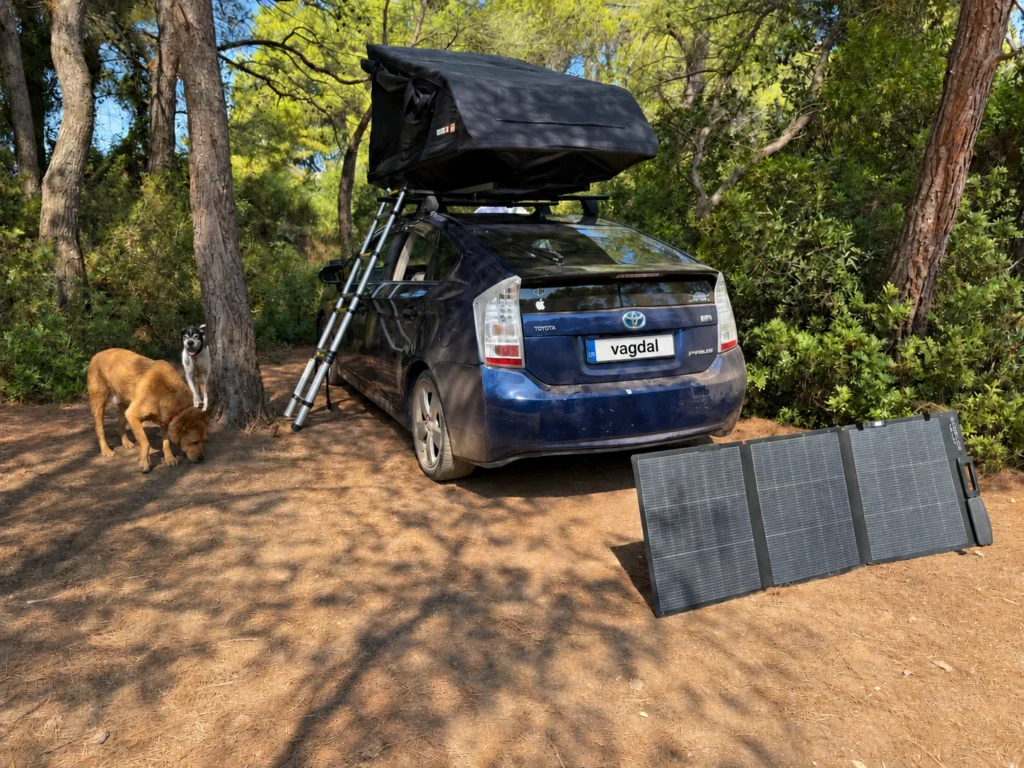
Four hours of assembly, less than five minutes to open, and a very comfortable night’s sleep. My experience with the TentBox GO, including what I wish I had known before buying it.
Last edited: 5 October 2026
I bought this tent with my own money. The price is my approximate recollection of what I paid, not a current offer.
Why I chose the GO
I bought the TentBox GO so I could head out camping with my sleeping space on the roof of the car. Its low weight and price mattered to me. After six summer nights, I would buy it again. There are compromises, though, and they are worth knowing about.
The initial assembly was the hard part
From unboxing to an assembled tent, it took me around four hours working alone. I would set aside time before the first trip rather than leave it until just before departure.
Mounting it on the car was a separate job: about 20 minutes with two people to lift it onto the roof and bolt it to the bars. These are my own times, not a promise for every installation.
At camp, less than five minutes
After the initial assembly, everything became much easier. Daily opening was straightforward and took me less than five minutes. Closing it was easy too, in the conditions I used it in.
That is one of its biggest advantages: arrive, open the tent, and your sleeping space is ready.
Comfortable sleep with a view of the stars
I slept alone and found it very comfortable. I added a 5 cm Grasshopper self-inflating mattress in a small-double size. My comments on comfort therefore refer to that combination, not to sleeping in the tent without a mattress.
The Grasshopper does not match the GO’s dimensions exactly. I am considering a better-fitting mattress, possibly TentBox’s own, but I have not tried it yet.
The roof opening was one of my favourite features. Lying down and looking at the stars is something I remember fondly from the holiday. The side and entrance openings, with their insect mesh, helped with airflow. I had no problem with mosquitoes inside.
Summer comfort and choosing shade
I did not feel hot during the nights I spent inside. But I also chose the parking position carefully: I checked where the sun would rise and looked for an obstruction on that side to avoid direct morning sun.
That matters when describing my experience. I have not tested waking up inside the GO with the summer sun shining directly onto it.
Space and ladder access
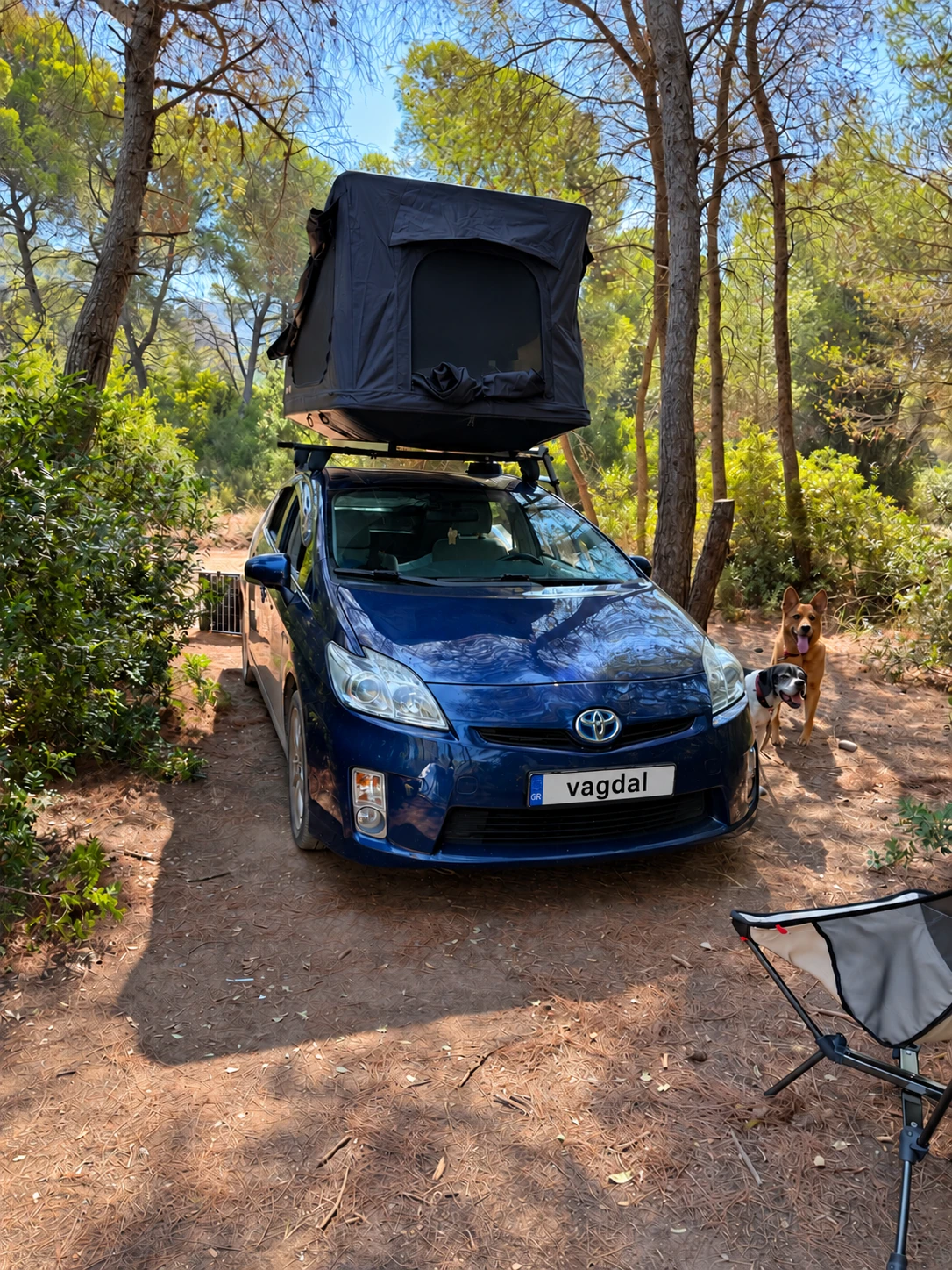
There was comfortable space for me on my own. I would like a little more width because, personally, I would find room for two adults and a child useful. That is my own wish, not a configuration I tested or a capacity I am claiming for the tent. I have not yet slept in it with another adult.
At 47, I was initially a little apprehensive about the ladder and the height. Climbing up turned out to be easy, and I got used to it. I took my time and was more careful on the way down.
What I left inside when closing it
I could leave the mattress inside, along with pillows and bedding, as long as the total bulk stayed low. That saves moving things in and out every day.
If it is overfilled, the travel cover will not fit properly. My setup fitting does not mean that any mattress thickness or amount of bedding will work.
Groceries first, setting up second
One drawback applies to rooftop camping in general: if you want to drive to the supermarket or go for a trip, you have to pack away your accommodation.
Even though the GO closes easily, I did not find it convenient to keep interrupting camp for short drives. I would get water, food and other essentials before settling into my chosen spot.
A mat and somewhere for shoes
One small thing I missed was a mat beneath the ladder. I realised its value when it was time to fold the ladder and put it inside the tent. Bringing dirt into your sleeping space, or having to clean the ladder first, is a nuisance. I would choose something easy to clean that does not slip or affect the ladder’s stability.
I am also considering a hanging shoe organiser, like the ones I have seen at Decathlon. I have not tried one yet, but it looks useful for keeping things organised outside the sleeping space.
The soft cover and storing the tent
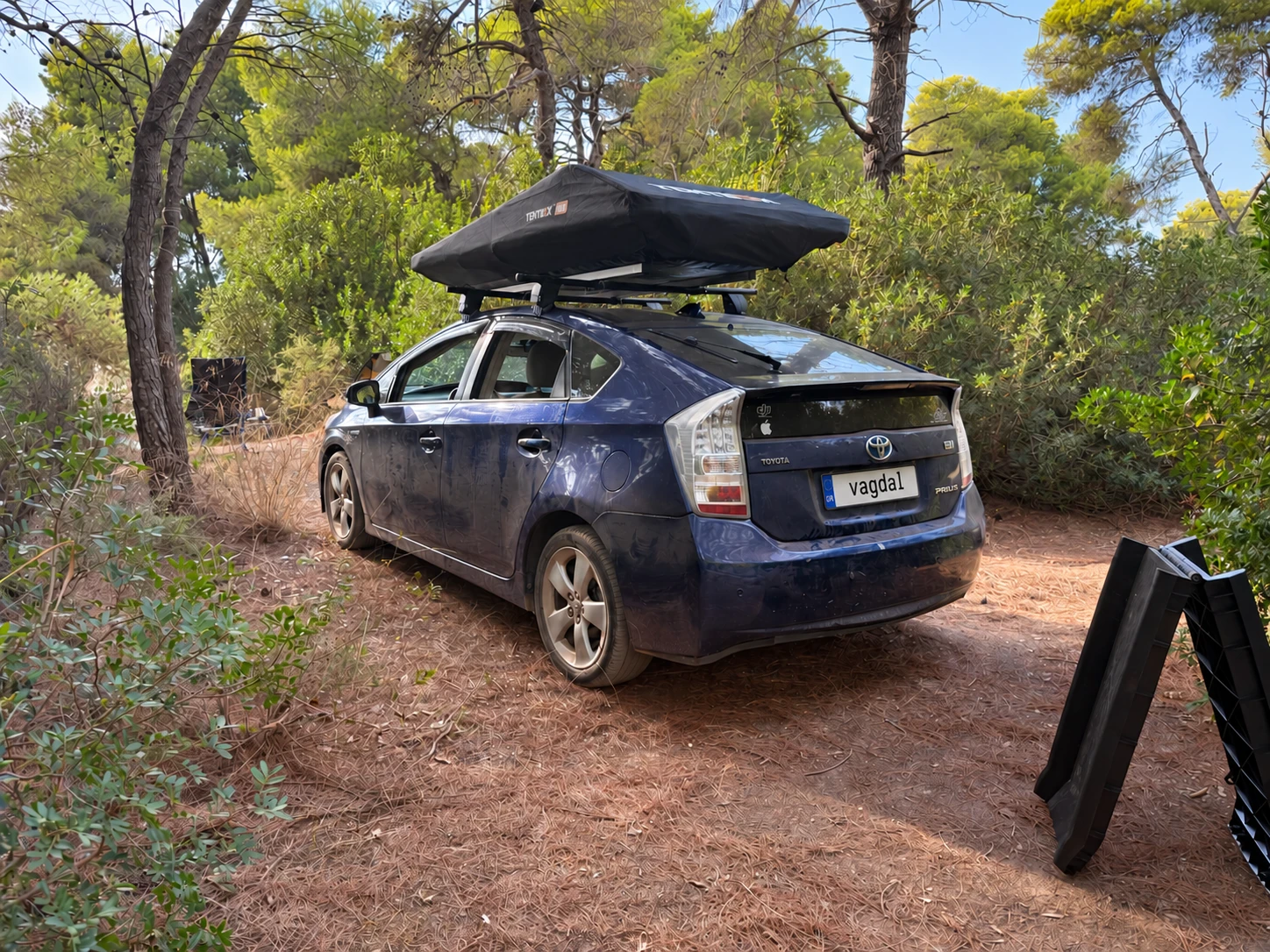
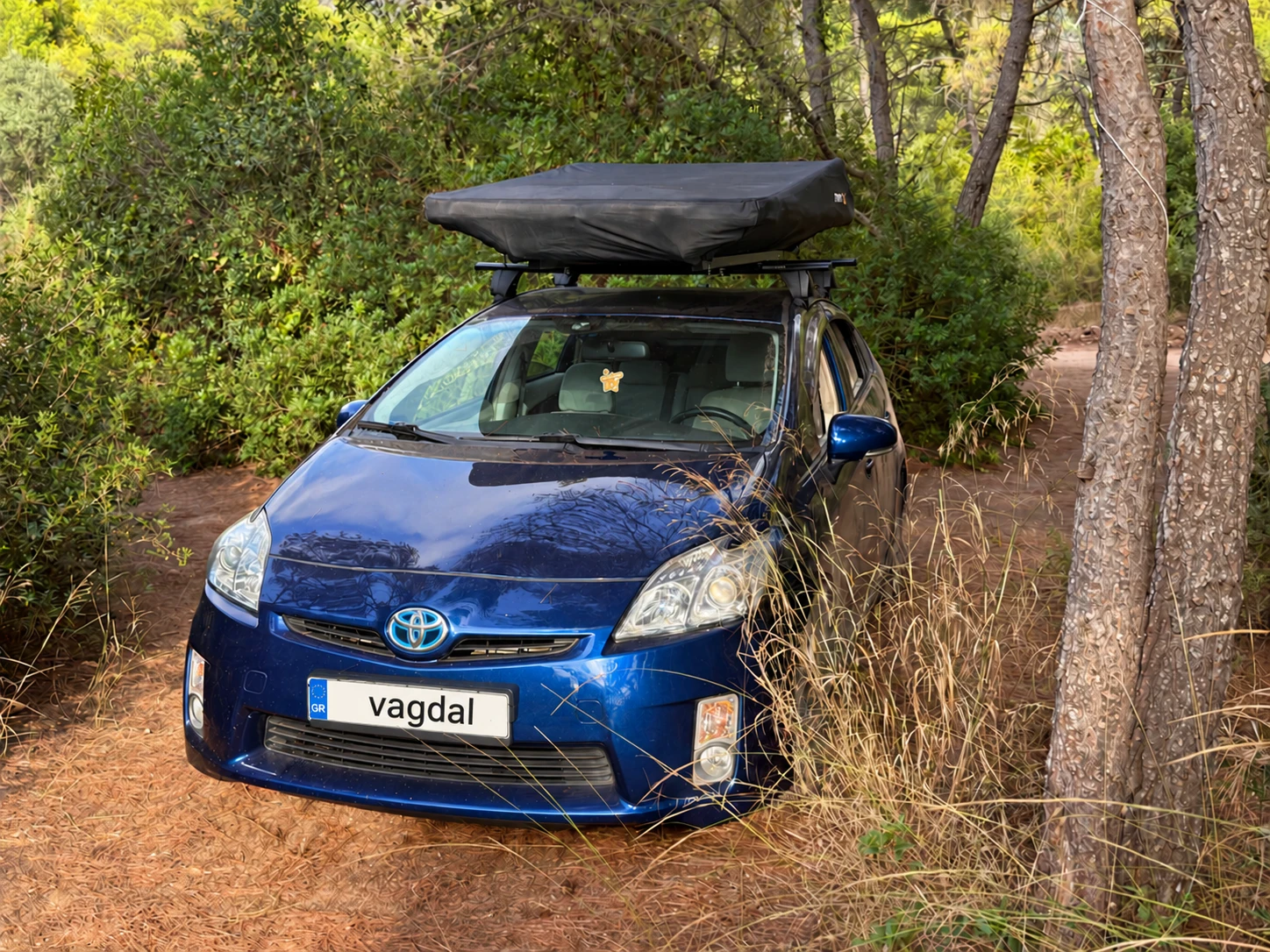
The GO has no hard outer shell. That makes me less comfortable with the idea of leaving it permanently on the car when parked on the street. I worry about damage to the cover, whether from someone deliberately cutting it or from a sharp branch.
No such damage has happened to mine. This is a concern I have as an owner. I would appreciate the protection of a hard cover, although low weight was one of the reasons I chose the GO.
If you decide to remove it between trips, you need help and somewhere suitable to store it. Fully assembled, it is still a large object.
Travelling with a tent on the roof
The general TentBox guidelines, checked on 5 October 2026, specify a maximum of 60 mph, approximately 97 km/h, with mounting checks before each journey and every 100 miles, approximately 161 km. They also require the tent to be fully closed before driving and the bars to be retightened after their first significant loading.
However, there is a discrepancy: the GO manual we previously checked states 70 mph, approximately 113 km/h. Until TentBox clarifies this, the conservative choice is the lower limit—and a lower speed still when conditions or applicable restrictions require it.
The extra height, crosswinds and changes to the car’s handling also need consideration. This is another constraint I factor into a trip. My installation on a Prius is not confirmation of compatibility for every car or set of roof bars.
What I have not tested yet
My experience so far covers six summer nights, sleeping alone with an additional mattress. I have not assessed the GO in heavy rain, strong winds or winter, or with two people sleeping inside. I also have no measured fuel-consumption data or enough use to judge long-term durability.
Would I buy it again?
Yes. For the way I used it, I was very happy with the sleep, ease of opening and overall experience. The initial assembly was the main challenge. After that, daily use was much easier.
I would like more width for my own family needs, and a hard protective cover would give me greater peace of mind. Even so, for what I paid and for those six nights, I consider it a good purchase. I am looking forward to using it again.
These are my own photographs. They have been edited with AI for lighting, colour and replacement of the registration number with “vagdal”.